
Vancouver Directory Years and Shelves
Vancouver city directory holdings are spread among several institutions. The heritage bibliography cites Polk issues for 1904, 1907, 1909, 1910, 1912, and a broader 1914 through 2005 span. That bibliography proves that researchers used those years, but it does not promise a complete surviving run at one desk. The Washington State Library catalog begins its Polk title series in 1931 and lists selected print or film holdings. The safest approach is to ask for a specific issue and record its title, publisher, year, and repository.
| Collection | Years | Where Held | Access |
|---|---|---|---|
| Polk Vancouver directories | Known citations from 1904 through 2005; WSL series begins 1931 | CCHM, CCGS, WSL, FVRL resources | Holdings vary; print, film, or licensed access |
| WSL print and microfilm | Microfilm 1918-1934; listed issues 1938, 1940, 1950 | Washington State Library | Library use only for cataloged items |
| CCGS transcriptions | 1890 sample, 1904 Polk, 1907 Du Ross lead | Clark County Genealogical Society | PDF, transcription, and library consultation |
| Maps and county images | 1892 Sanborn; county records 1803-2010 | Library of Congress, FamilySearch, archives | Online images vary by series and account |
No official source in the research confirms the final printed issue or an unbroken year-by-year run. Missing shelf years should remain gaps. Call the repository, check its catalog, and ask whether an issue is in storage, on microfilm, or inside a licensed database. An absent catalog hit does not prove the issue never existed. It may reflect a title change, shared regional edition, incomplete cataloging, or restricted online access.
Vancouver City Directory Research Desks
The Clark County Historical Museum Research Library at 1511 Main Street holds Polk directories, maps, newspapers, cemetery records, oral histories, historic-home surveys, and topical boxes. Its distance-research form asks for names, dates, places, a research type, desired materials, and a budget. Requests were paused when the source was inspected, so check the current page before relying on that option.
The Clark County Genealogical Society Library at 3205 NE 52nd Street reports more than 8,000 regional items. Its catalog includes a 1959 Vancouver city directory, while society publications preserve earlier transcription work. Fort Vancouver Regional Libraries, headquartered at 2018 Grand Boulevard, adds in-library Ancestry Library access, HeritageQuest, fire-insurance maps, newspapers, and other licensed sources. These channels are complementary. Museum material supplies local context, society work can expose a transcribed name, and library databases may reveal a scanned issue.
See the museum's research interface before planning a visit or request.
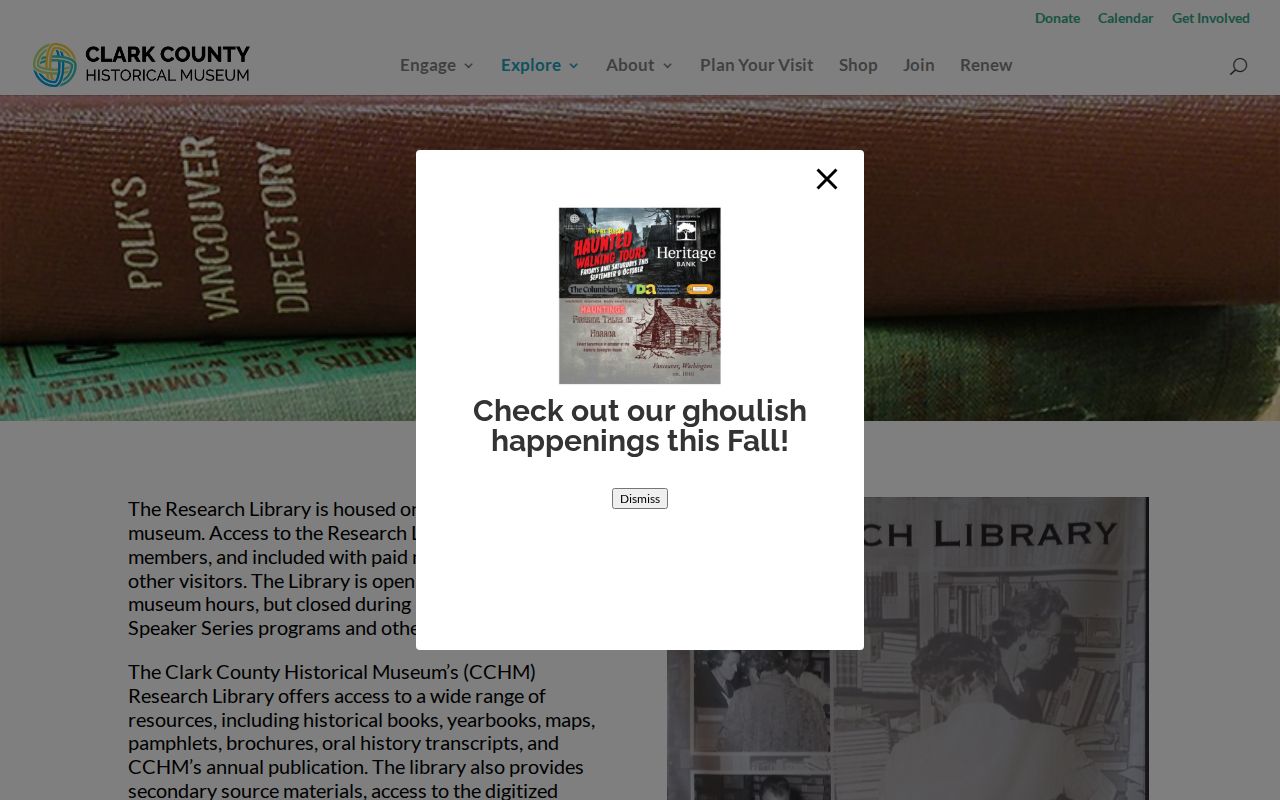
The page confirms that city directory work often depends on a local collection rather than a single open search box.
Vancouver Directories Beyond Open Search
Some Vancouver city directories sit behind library access rather than a public web index. FVRL describes Ancestry Library as available inside library buildings. It also points to HeritageQuest, Newspapers.com, Access World News, ProQuest, and FIMO fire-insurance maps. A library card may be needed for FIMO, and each newspaper product has its own date range. Access World News lists The Columbian from May 26, 1994 through April 29, 2024, while ProQuest lists January 1, 1995 through February 3, 2024.
Those dates describe the database, not the life of the paper or the full depth of local holdings. Search names, old firms, streets, school activities, marriage notices, probate notices, and community roles. Then save the publication name, issue date, page, database, and access date. A newspaper mention can explain why someone appears or vanishes between annual issues, but the directory entry and dated notice should remain separate pieces of evidence.
The FVRL genealogy page shows the available route into these licensed and local-history tools.
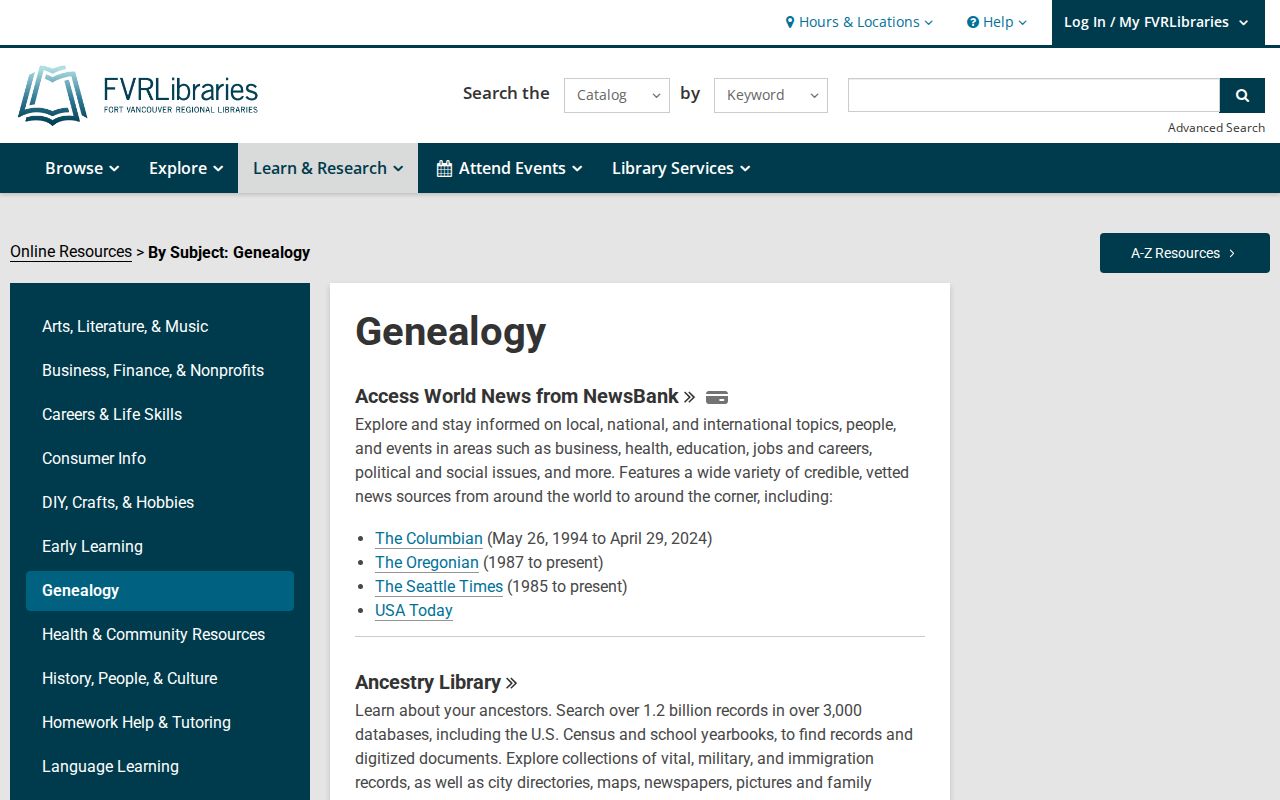
Its mix of directory, newspaper, yearbook, census, and map resources helps test a historical name from more than one angle.
Decode a Vancouver Directory Entry
The inspected 1890 sample does not read like a current address list. One line gives a name, short trade, lodging or residence marker, and an intersection or directional phrase. Examples include “Steward Louis, engr, bds 7th cor West F” and “Stewart Frederick M, lab, res 2d nr Main.” Keep each string as printed. The source did not provide an abbreviation key, spouse-in-parentheses field, owner mark, or widow notation, so none should be assumed.
| Name | Surname, given name, and sometimes a middle initial |
|---|---|
| Role | Abbreviated occupation, employer, or business association |
| Place | Residence, boarding room, intersection, or business location |
| Marker | Transcribed forms such as res, bds, rms, cor, nr, and bet |
| Issue context | Publisher, title, year, and page that frame the snapshot |
- Criss-cross directory
- A reverse arrangement that groups entries by street or address. No verified local title and year run was found, so ask each repository.
- Householder index
- A list centered on the person or household named by the publisher, which may omit other people at the same place.
- Abbreviation key
- The publisher's legend for shortened words. Preserve unknown forms if the volume does not supply one.
A city directory entry can describe a resident, boarder, office, shop, or contact. It is not proof of ownership or continuous occupancy. Compare it with a deed, census page, map, probate file, or another annual issue.
Clarke Names in Vancouver Directories
Historic place names matter. The county context began as Vancouver District in 1844, changed from district to county in 1845, and received the Clarke or Clark name in 1849. The “Clarke” spelling remained in records until 1925. Harry Du Ross's 1907 directory title expressly uses “Clarke County,” so a strict modern spelling search can miss a useful result.
Try both Clark and Clarke, plus Vancouver District where the date warrants it. Search initials as well as full names. Street entries may use “cor” for corner, “nr” for near, “bet” for between, or a directional phrase instead of a modern number. The first probate court met in Amos Short's residence in 1850, another reminder that early civic records and private places could overlap in ways a modern index does not show.
Note: Preserve the place label printed in the source, then add a modern cross-reference in your notes rather than silently changing it.
Map Vancouver Directory Addresses
A name and street phrase become more useful when mapped. The free 1892 Vancouver Sanborn set contains nine sheets with blocks, building footprints, uses, and period street labels. The county bibliography also cites maps from 1907, 1908, 1911, and 1929, while the State Library has fire-insurance map microfilm spanning 1884 into the 1950s.
A map is not a person index. Use it to test whether a block, structure, or street form existed near the date of the city directory. Next compare the legal description in a deed or plat. The current parcel can help bridge geography, but present-day situs and mailing fields should not be projected backward. No official citywide street-renumbering year was located, so address changes must be solved one property at a time through directory, map, plat, deed, annexation, and GIS evidence.
Vancouver Directory Record Timeline
The directory shelf fits into a longer record timeline. Each milestone changes which label, format, or custodian is most useful.
| 1890 | CCGS sample shows compressed names, trades, lodging marks, and intersection addresses. |
|---|---|
| 1892 | Sanborn's nine sheets provide a block and building bridge. |
| 1904 and 1907 | Polk transcription and Harry Du Ross title establish early directory leads. |
| 1925 | County corrected the long-used “Clarke” spelling to “Clark.” |
| 1931 onward | State Library catalog carries the Polk Vancouver series and later regional title. |
The bibliography reaches into 2005, but no inspected official source confirms the last printed issue. Treat that as an open catalog question, not a date to guess.
Publisher changes can also hide a year from a simple catalog search. A title may expand from the city to Clark County or include Camas and Washougal, as the 1946/47 through 1950 State Library description does. Search the catalog by place, publisher, and date, then inspect the title page. A bound volume's cover wording may differ from its catalog title. Photograph or transcribe both, along with the repository call number, because that small step makes the source traceable for the next person who follows the family.
Trace Family Through Vancouver Directories
Family history works best when each annual publication is treated as one dated observation. Begin with the closest known year, then move in both directions. Federal census releases provide a broader household snapshot under the 72-year rule, but their dates and household definitions do not match a city directory.
- Search the year before, the target year, and the next available issue. Copy the headword and initials exactly.
- Record the occupation, employer text, lodging or residence mark, street phrase, issue title, and page.
- Check nearby surnames and alternate spellings. A household may be indexed under one member or a business.
- Pair the sequence with a released census, period map, deed or plat, and any dated newspaper notice.
- If the name disappears, test death, relocation, omission, and issue coverage separately. Do not choose one without support.
FamilySearch's Washington County Records collection spans 1803-2010 across many series, and Clark County naturalization images cover 1850-1982. Image and index access varies. Cemetery records at CCHM and CCGS, school yearbooks, church custodians, probate material, and newspapers can close part of a gap. For a modern name that needs a current check, move to the Vancouver resident lookup workflow instead of treating an old publication as current.
A sound research log separates what the source says from what it may suggest. Record a directory listing as a dated publication entry. Record a census household, deed party, burial record, and newspaper notice on their own lines. When two sources point to the same person, note the shared middle initial, trade, street, relative, or legal description. When they conflict, keep both readings until another dated record resolves them. That discipline matters in Vancouver, where Portland ties, military movement, shifting city limits, and the older Clarke spelling can produce similar names in different settings.
Vancouver Records Beyond Print
The Washington State Digital Archives collections provide another route when a city directory points to a county event or an older government series.
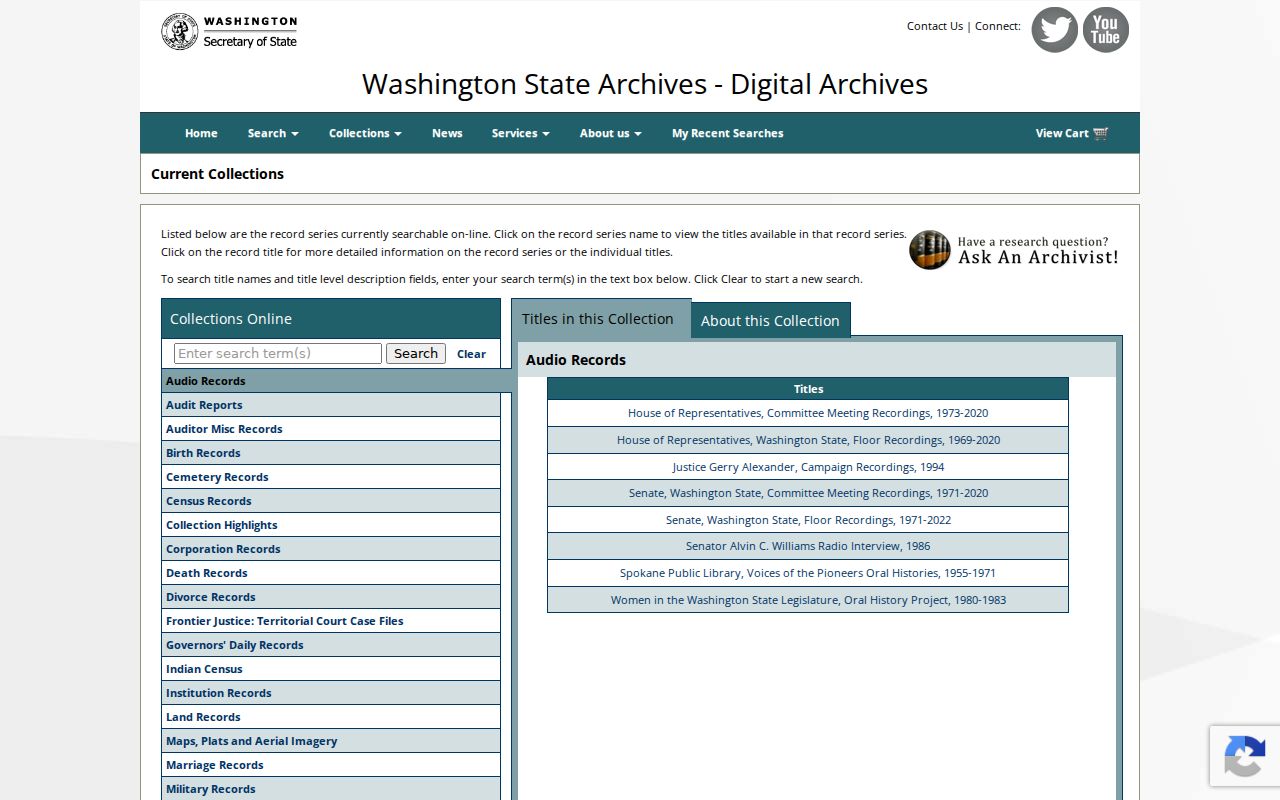
The collections screen is a finding route, not a promise that every Vancouver issue or record image is online. Preserve the collection title and date, then use the archive or library reading-room channel when access stops.