
Finding Vancouver Directory Records
Start with the kind of fact already known. Put a Vancouver street address into Clark County's property system. Put a person's name into a court index, recorded-document search, business filing, or historical directory when that record fits the question. Current parcel and map systems explain land and jurisdiction. Local libraries hold much of the older printed trail. No public roll is a complete list of Vancouver residents, and one record rarely proves both identity and current occupancy.
Build an evidence chain. Record the exact spelling, source date, parcel or case number, and the role shown. A deed names parties to a transfer. A tax mailing name may live elsewhere. A voter file has strict access rules, while a directory captures only what its publisher gathered for that issue. Compare at least two independent identifiers before treating two entries as the same person.
- Check an address or tax account in the county property system and save the parcel number.
- Confirm the parcel, city jurisdiction, subdivision, and nearby lots in the county map.
- Use the parcel or party name in the Auditor's recorded-document index.
- For an older question, consult a dated city directory, map, newspaper, or archive series.
- Ask the responsible office for the file when online coverage ends.
Vancouver Resident Record Keepers
Clark County offices hold most records that connect a Vancouver name with land, a filing, or an election district. The Auditor records deeds, liens, plats, easements, and marriage licenses. The Assessor and GIS staff maintain parcel, situs, tax-account, permit, and map tools. Elections staff handle registration changes and local election material, while statewide data requests now go to the Secretary of State. Each office offers more than a web portal. Counter, phone, email, and mail routes matter when an index is incomplete. The full address sequence appears in the Vancouver street directory.
Clark County Assessor and GIS
Public Service Center
Vancouver, WA 98660
GIS: 564-397-4652
Search Vancouver Parcels First
The Property Information Center, or PIC, is the best first stop for a known address. It accepts a street address or tax account and returns the parcel bridge used by other county systems. A parcel is a mapped unit of land with its own identifier. PIC can expose situs, legal-description, tax, permit, sale, and administrative fields, although owner and history access may vary. The situs address describes the site. The tax mailing address comes from recorded documents and excise affidavits. Neither proves who lives there now.
Open MapsOnline after selecting the parcel. Its layers can confirm roads, subdivisions, ZIP context, jurisdiction, permits, zoning, annexation, and adjacent taxlots. These maps aid research but are not surveys. Boundary and easement questions require a recorded plat, deed, or survey.
| Field | Input | Result |
|---|---|---|
| Street Address | Full or partial address | Matching parcel and situs |
| Tax Account | County account number | Direct parcel record |
| Find Parcel | Parcel, house number, or street | Map and nearby lots |
Vancouver Deeds Name Parties
The Clark County Auditor's LandmarkWeb index links Vancouver names and parcels to recorded documents. Search by grantor, grantee, document type, date, instrument number, book and page, or legal description. A grantor transfers an interest, while a grantee receives it. The public index begins in 1961. Earlier deeds need an Auditor inquiry, archive, microfilm, FamilySearch, or library route.
Online images are convenience copies. Certified copies come through the Auditor's copy process. Save the instrument number and compare its legal description with PIC. A recorded party is not necessarily an occupant.
The LandmarkWeb form shows the available document and date controls.
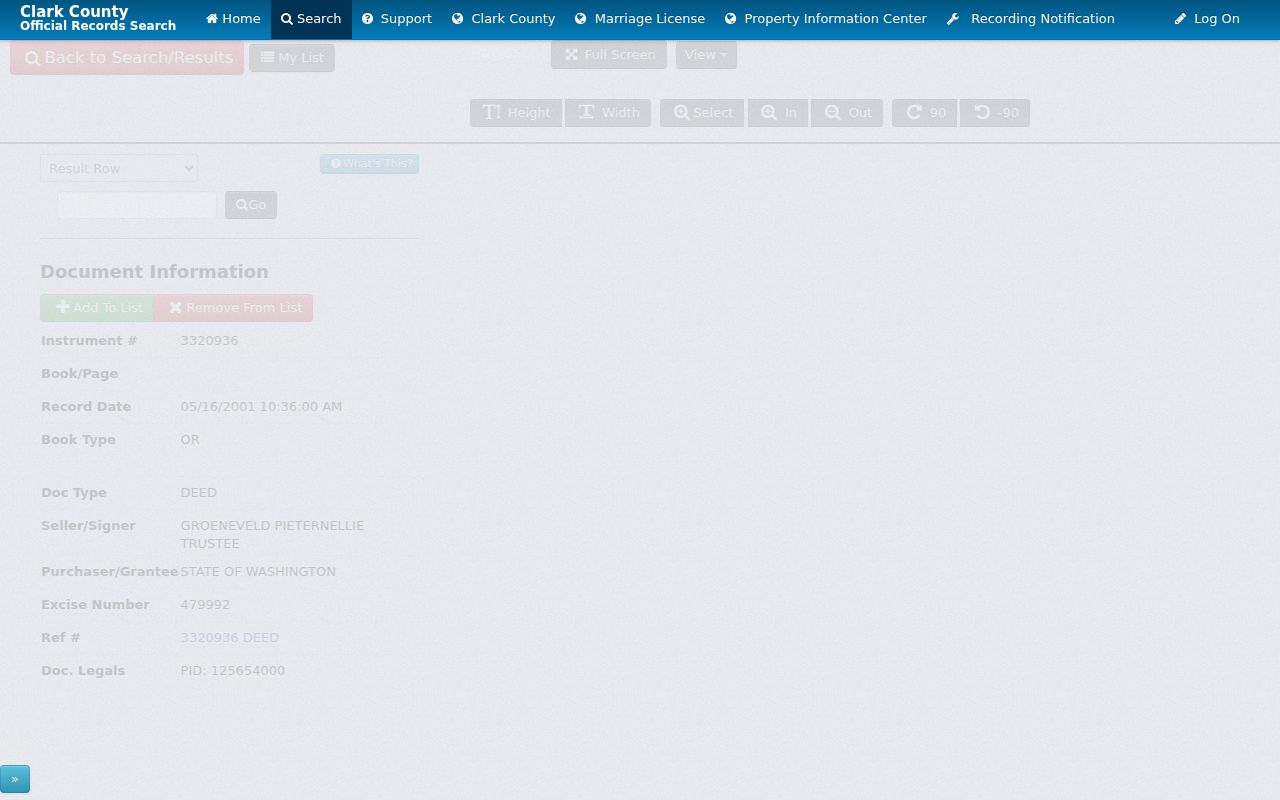
The form is only the index gateway, so the document or certified route supplies the stronger evidence.
Vancouver Voter Record Limits
VoteWA is a personal account route requiring the voter's first name, last name, date of birth, and reCAPTCHA. It is not public street browsing. Public lists, daily returns, and challenge reports now route through the Washington Secretary of State Public Records Office. Requests must meet the affidavit and use restrictions in RCW 29A.08.740.
A lawful product may include a name, available address, status, registration date, precinct, districts, and participation history. It does not promise birth dates, signatures, identification numbers, protected addresses, or ballot choices. Contact County Elections for updates or cancellations, and the state office for data products.
Lawful use. Never use directory records to stalk, harass, threaten, or expose a protected address.
Current Vancouver Directory Sources
Today's directory-like sources describe narrow roles. Property tools connect land with available owner fields. Recorded documents identify parties. Court indexes identify case parties, and business searches identify registered roles. None promises a full household. A Vancouver residents directory is therefore a comparison of dated official sources, not a master list.
| Source | Who It Lists | Keeper | Access |
|---|---|---|---|
| Property Information Center | Parcels and available owner fields | County Assessor/GIS | Free web and lobby help |
| VoteWA and voter data | Own record or lawful data product | County Elections and state SOS | Identity match or request |
| LandmarkWeb | Recorded-document parties | County Auditor | Free index; copies separate |
| Washington court search | Case parties | State courts and County Clerk | Reference search |
| SOS CCFS | Business entities and agents | Secretary of State | Free public search |
Choose by question. Ownership belongs in parcel and deed records. A case needs the court index and Clerk file. A business role belongs in the corporation filing. The Vancouver resident lookup explains how to verify one name across them.
Verify Vancouver Court Names
The Washington Courts search and Odyssey Portal are reference indexes. Results may show a court, case number, party, filing date, calendar, and document list. The official file remains with the court. Juvenile, sealed, confidential, and protected material is restricted.
Clark County Clerk lobby terminals, email, phone, and copy routes reach Superior Court files. Major microfilm series begin in 1890, while digital dates differ by case type. District Court and federal PACER have separate channels. Compare a middle initial, case number, date, or known address before linking a common name to one Vancouver resident.
The Odyssey portal shows the county's online entry point.
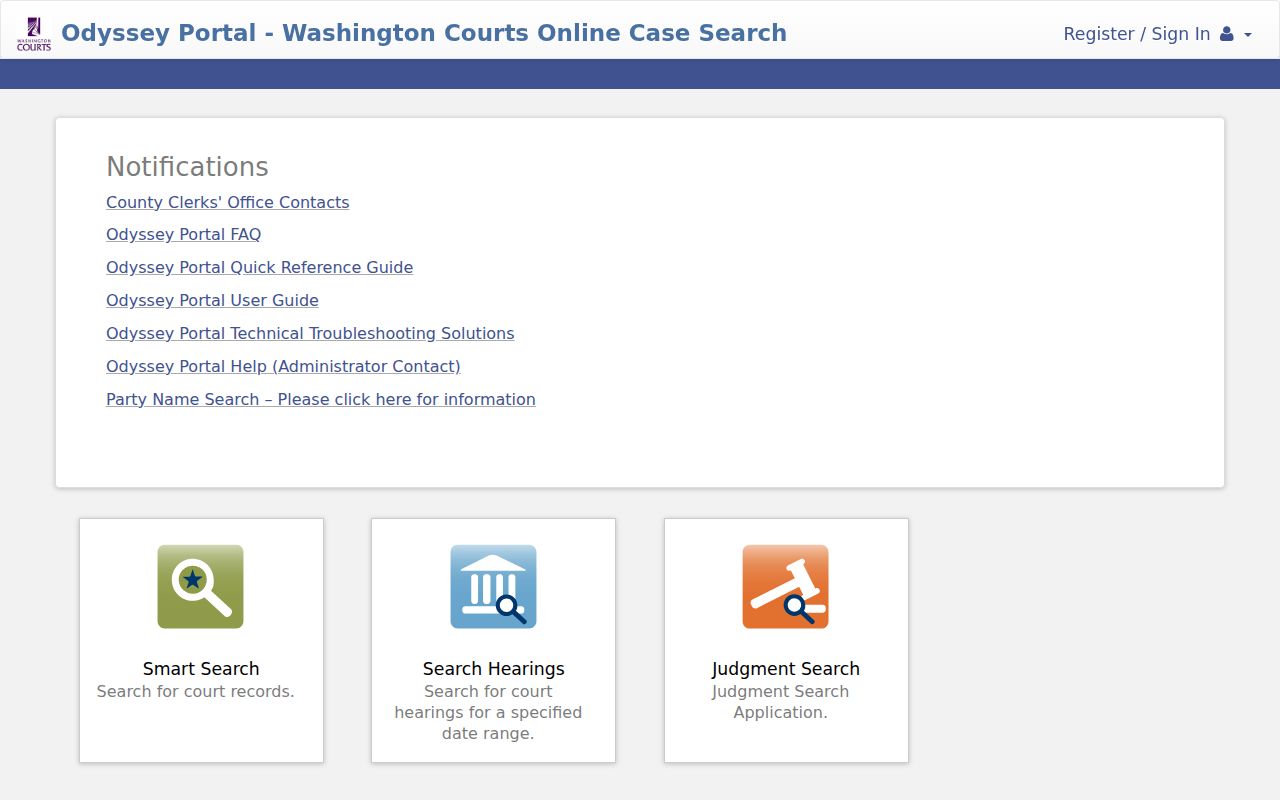
An index result should lead to the Clerk's file instructions when the underlying record matters.
Request Vancouver Records Directly
The City accepts requests online, by mail, fax, in person, or verbally. Clark County uses GovQA and department contacts. Under the Washington Public Records Act, RCW 42.56.520 requires a response within five business days. The agency may provide records, seek clarification, estimate more time, or cite a lawful denial. Full production is not guaranteed in five days.
Name the office, subject, dates, record type, and known parcel, case, permit, or instrument number. Ask to inspect or request electronic delivery. Keep the request number, response date, fee estimate, and any redaction basis.
The county request page identifies the current fallback channel.
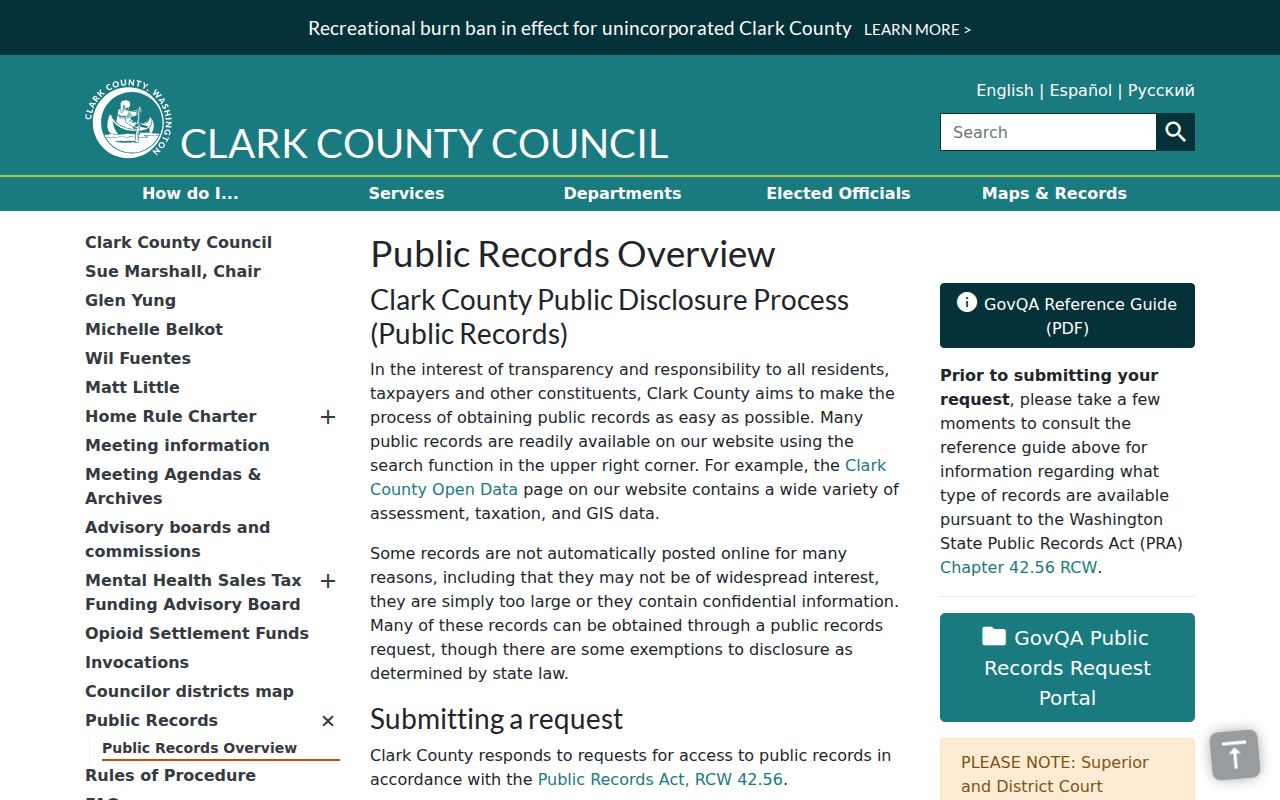
This route reaches department files that lack a complete public index.
Vancouver Names Cross Boundaries
“Vancouver” may mean an incorporated city, postal city, Clark County address, planning area, or historic label. A Vancouver mailing address can sit outside city limits. Use the City's city-limit checker, then PIC jurisdiction and county map layers. That result decides which permit, code, police, or planning office holds a file.
Historic records may say Vancouver District or “Clarke County,” a spelling used until 1925. Old directories also use intersections, directional shortcuts, and lodging marks. Search both county spellings. The 1997 East Vancouver annexation changed the city boundary and record context, so never project today's jurisdiction backward without checking.
ZIP labels add a third test. The City's planning work uses ten ZIP geographies, including one described as extending toward Camas, but those study areas do not redefine USPS delivery routes or Census ZIP Code Tabulation Areas. Store the site address, tax mailing address, postal ZIP, and city-limit status as separate facts. A mismatch can explain why a Vancouver record appears under Clark County or another service area. It should prompt a jurisdiction check, not an automatic correction.
Neighborhood names also change with city growth. Hudson's Bay, Wildwood, Columbia River, and Woodland Meadows have distinct histories, recognition dates, and planning records. Woodland Meadows entered city context after the July 2018 5th Plain Creek Station annexation. A current association label cannot be assumed for an older deed or directory entry. Use the map and annexation date that match the record year.
Compare Vancouver Source Types
Official rolls are narrower than commercial search services, but their custodian and role are clearer. A parcel record describes land. A court index describes a case. A directory issue gives a dated publication entry. Commercial compilations can mix stale addresses or merge similar names. Treat them only as leads and cite the official record.
| Source | Strength | Limit |
|---|---|---|
| Official index | Named office and date | Shows one legal role |
| Certified copy | Official reproduction | Fees or limits may apply |
| Historical publication | Dated local clue | Annual gaps and errors |
| Commercial compilation | Possible lead | Source and freshness unclear |
When records conflict, keep each date and role visible. Do not force them into one current-resident claim.
Check Vancouver Name Clues
Two statewide name sources can help separate a current administrative role from a loose lead. The Washington Corporations and Charities Filing System searches a business name or UBI and can show status, jurisdiction, formation dates, registered agents, governors, offices, and filings.
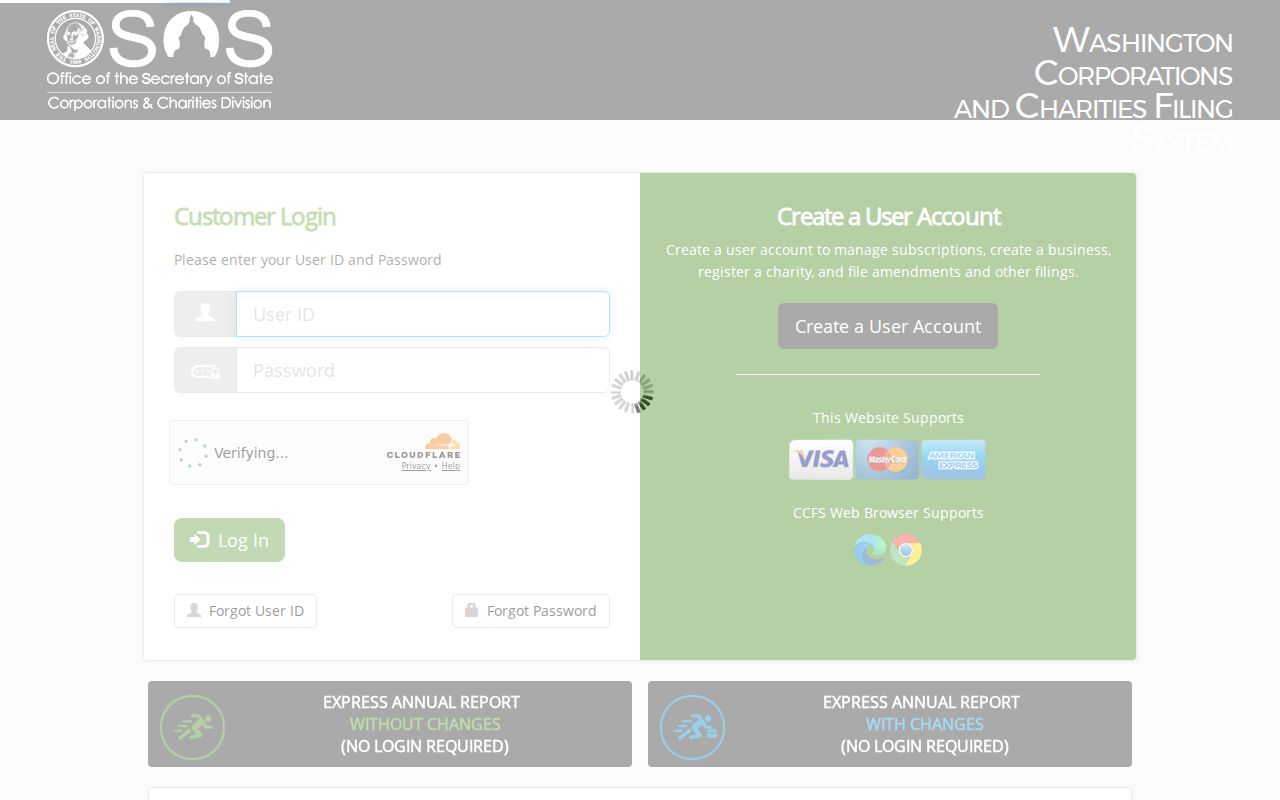
A registered-agent or office field describes an entity role. It does not establish that the named person lives at that address.
The official Washington Unclaimed Property program also accepts name searches and explains the claim process.
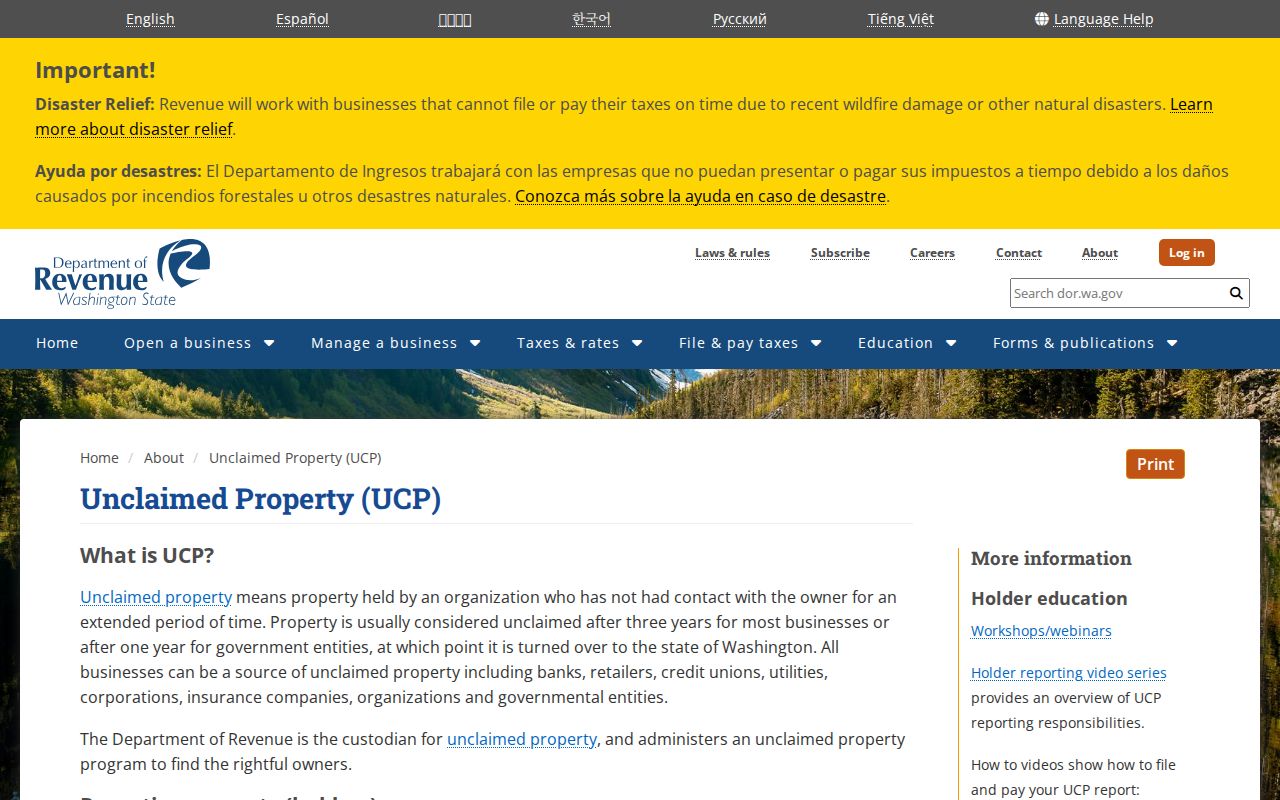
An apparent match is only a claim lead until the state verifies the required proof. Keep it separate from parcel, voter, directory, and court evidence.
Historical Vancouver Resident Directories
Vancouver's printed trail is divided among the Clark County Historical Museum, Clark County Genealogical Society, Fort Vancouver Regional Libraries, and Washington State Library. Known sources include a partial 1890 sample, 1904 material, early twentieth-century issues, selected later Polk volumes, maps, yearbooks, newspapers, and local transcriptions. A directory can show a name, spouse, occupation, employer, lodging mark, and address for one issue. It cannot prove continuous residence or ownership.
The Museum research library has Polk volumes, cemetery records, maps, yearbooks, historic-home surveys, and topical boxes. CCGS holds more than 8,000 regional items. FVRL adds licensed genealogy, newspaper, and map databases. The full collection trail appears in the Vancouver city directories page.
- Roll
- An official list created for one duty, such as tax or voting.
- Index
- A finding aid that points to a document or file.
- Criss-cross directory
- A directory arranged by address or phone rather than only surname.
- Parcel
- A mapped unit of land with a county identifier.
Map Historic Vancouver Residents
The free 1892 Vancouver Sanborn map contains nine sheets and can bridge an old intersection to building outlines. The State Library holds more map microfilm and Metsker atlases. Pair a map with a directory, plat, deed legal description, or newspaper notice. A map gives physical context, not a list of occupants.
Vancouver horse railway service ran from 1889 to 1895, electric streetcars from 1908 to 1926, and tracks were paved over in 1926. Modern pavement can hide an older route. No official citywide renumbering date was found, so use dated maps and plats instead of guessing.
For a missing year, divide the work among repositories. CCHM is strongest for Polk directories, maps, photographs, oral histories, community histories, historic-home surveys, and topical boxes. CCGS adds local transcriptions and a regional genealogy catalog. FVRL provides licensed newspapers, census tools, fire-insurance maps, atlases, and military databases, though some require a library card or in-library use. The Washington State Library adds cataloged print and microfilm, while Digital Archives and FamilySearch can lead to county series and images.
Write down the institution, collection title, issue date, page or image number, and access condition. The same Vancouver household may appear under initials in a directory, a legal description in a deed, and a block outline on a Sanborn sheet. Those sources become persuasive only when their dates and roles remain separate.
Document Vancouver Directory Results
Save the portal or collection title, URL, inspection date, record date, jurisdiction, and stable identifier. Use a parcel or instrument number for land, a case number for court files, and an issue and page for a directory. Mark whether the item is a current record, convenience image, certified-copy route, historical publication, or unverified lead.
No online hit is also a coverage result. LandmarkWeb stops at 1961. Court digitization varies by case type. VoteWA can fail because of input or status rules. One library may lack a year held by another. Move through the documented counter, mail, phone, archive, and library channels. That method makes a Vancouver residents directory search reproducible.
For family research, keep the role beside the name. An Auditor grantee, Assessor taxpayer, directory boarder, probate heir, business agent, and court party are not interchangeable labels. Add the source's as-of date, since a current administrative record and an annual publication describe different moments. When an address is sensitive or protected, retain only the level of geography needed for the lawful research goal. The Washington Address Confidentiality Program uses substitute addresses for eligible participants, and a withheld address is not a data error. If a source cannot be checked online, note the office contact and the next in-person, mail, library, or archive route instead of filling the gap with an assumption.